
The Jan du Toits: A River You Have to Earn


April. The last weeks of the South African trout season. The fish are in their best condition of the year — deep-bellied, strong, coloured up after months of feeding through summer. The Cape mountains are beginning to turn. There are rivers in the Western Cape you can book on a Tuesday afternoon, and then there is the Jan du Toits.
Some places you plan for. Others you wait for.
The Jan du Toits Kloof — the JDTs, as it is known to those fortunate enough to have fished it — runs deep in the Boland mountains outside Wellington, protected on all sides by Cape Nature and managed by the Cape Piscatorial Society. The CPS holds a special access arrangement with Cape Nature and the Mountain Club of South Africa, but the number of permits issued each season is severely limited, and the only way to obtain one is to win the annual lottery. Members enter a draw held each July or August. There is no other way in. No amount of knowing the right people, phoning the right office, or arriving at the trailhead with good intentions will get you there. You enter, you wait, and if your name comes out of the draw, you go. When my number came up, I understood what it meant.
The Hike In
We were four: Alex Whyte, Jean Michel Cornish, Nick Hlozek and myself. We shouldered packs — sleeping bags, two nights of food, camp kit, a moka pot, a bottle of wine — and started walking from the lower valley at first light.
The access is not casual. From the start point the terrain demands attention immediately: boulder-hopping, fynbos-pushing, route-finding through a kloof that does not give itself up easily. The CPS is not exaggerating when it describes the Jan du Toits as a potentially dangerous wilderness area and recommends that no party should enter without someone who has been before. Several hours of hard walking brings you to the section of river where camping is possible. And still there is significant water above — more valley than we would have time to fish.
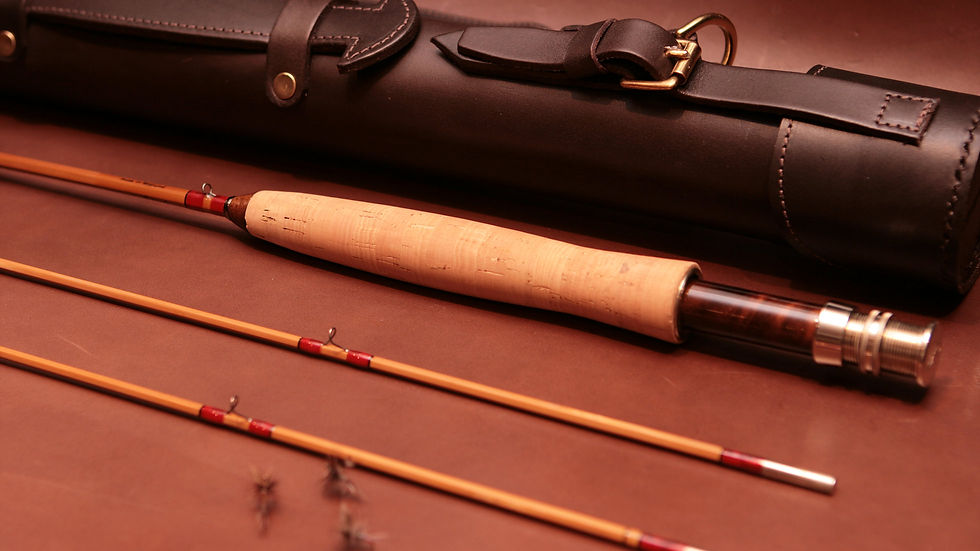
The rods travel broken down in a tube strapped to the pack. Even so, navigating the gorge sections with a full load requires care. The river forces decisions: wade, climb, or find a way around. The water runs clear over amber and gold rock, tannin-stained from the fynbos of the mountains above, cold even in April.

The Cave
We made camp under a large sandstone overhang halfway up the valley — a natural shelter that has served as a campsite for a very long time. The rock face curves and billows in ochre and rust overhead, shaped by water and time over millennia. We rolled out sleeping bags on flat rock, sat by the old fire ring, and cooked our dehydrated meals under a sky that had no competition.

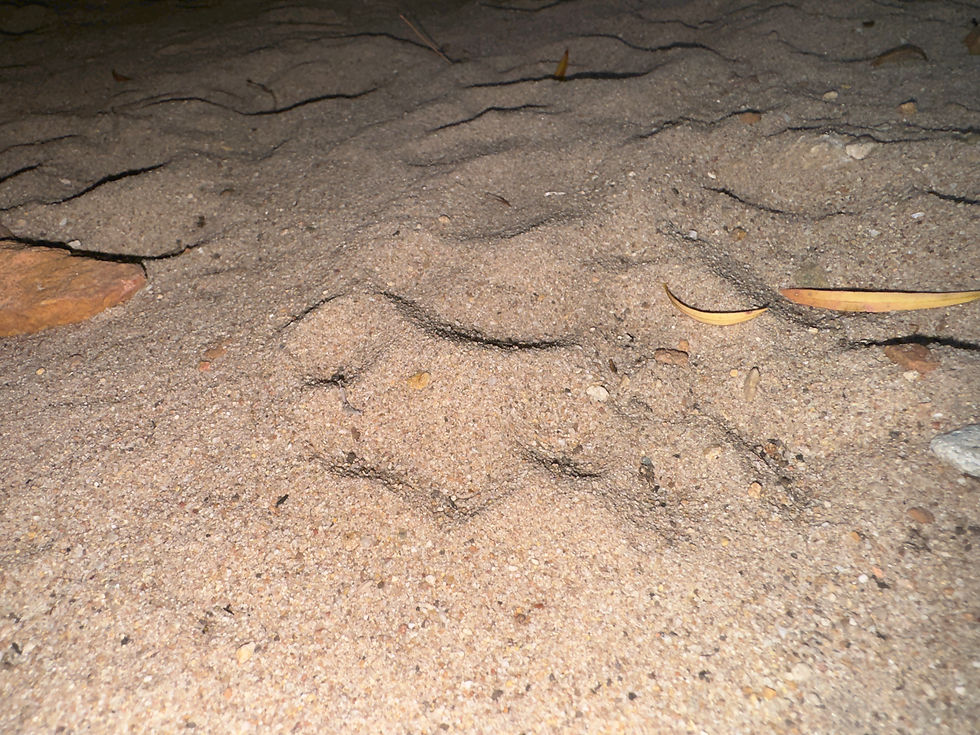
In the morning, we found leopard prints in the fine sand at the back of the cave. Fresh ones. We were not the only ones using the shelter.
The River
Writers have tried — and mostly failed — to adequately describe the Jan du Toits. E.J. Shelton documented it in the pages of Piscator, the CPS journal, and the piece has been kept in the society's archive ever since. Denver Bryan, the American photographer whose images have graced the covers of the world's leading fly fishing publications for decades, visited the river with Tom Sutcliffe and declared it the most beautiful stream he had ever photographed. We understood that the moment the valley opened up.

The JDTs is a boulder stream in the truest sense — not just rocks in the river but a river that has, over vast geological time, rearranged a mountain range into its bed. White and grey quartzite boulders the size of houses fill the channels. In places, massive slabs have been wedged into fallen trees by floods of a force that is difficult to imagine standing there in the April calm. The water moves between and beneath and over these obstacles in ways that create every kind of holding water imaginable: deep amber pools framed by red sandstone walls, fast broken runs, shallow glides over golden gravel, dark undercuts beneath overhanging rock.

The fly life was extraordinary. Caddis and sedge on every rock surface. Damsels rescued from the film. Beetles. Even a half-drowned carpenter bee hauled out and left to dry in the sun. In a river this wild, this far from any road, the trout feed with a confidence you rarely encounter. They hold in open water. They move for a fly. They do not spook the way a heavily fished river's fish will.

The Springbok
I fished the trip with a rod I was still developing at the time — a prototype that would eventually become the Sjambok range. It was designed precisely for this kind of water: a compact, light, packable split cane rod built for boulder streams and backcountry fishing, able to handle tight quarters, wet hands, heavy packs, and the kind of casting you do when there are rocks on three sides and a fish is rising six feet away.
It performed exactly as intended. In a valley that tests every piece of equipment you carry, a split cane rod with the right action and the right length is not a romantic indulgence. It is a practical tool. Short, precise casts between boulders. Gentle presentations on glassy pools. The flex of the rod telegraphing every run of every fish through your hand.
That rod became the Sjambok. It earned its name in the Jan du Toits.

The Fish
We caught fish throughout the two days — rainbows in superb condition, fat and hard-fighting, coloured gold and pink from the tannin water and the autumn season. The JDTs fish are not numerous in the way that a stocked water's fish are numerous. Every one felt like something earned.

On the second day I landed one of the biggest wild trout I have taken from the Cape streams. It came from a shallow pool, right against the bank — a fish that had been visible, holding in the current, for some minutes before I could work myself into a casting position. When it took, it ran immediately into the fast water below and the Springbok bent into it in a way that still stays with me. We released everything. I always do, but here it felt especially right — and in any case, it's the law.

What the JDTs Is
It is a river that has been protected by its own inaccessibility for most of its existence, and more recently by the careful stewardship of the CPS and Cape Nature. The lottery is not bureaucratic inconvenience — it is conservation in practice. The river remains what it is because the number of people who fish it each season is genuinely small.
Standing in it, you are aware of how much valley lies above you, unfished, unknown to most people alive. We ran out of time before we ran out of river.
I will enter the lottery again.

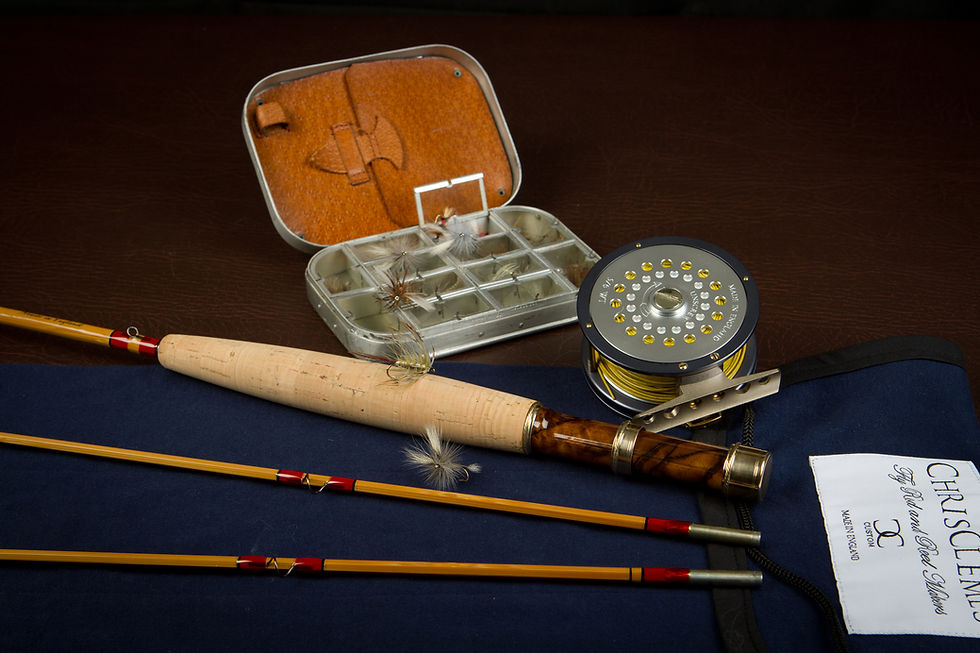
The Sjambok S-Glass fly rod — the production version of the rod fished on this trip — is available at £599, complete with a handmade leather rod tube. Made in small batches — two in stock for immediate dispatch, with further rods made to order. View the Sjambok →
Spring offer: Order a bespoke split cane rod before July 2026 and receive a complimentary English bridle leather rod tube upgrade — worth £320. Commission a rod →
Members of the Cape Piscatorial Society looking to commission a split cane rod built for the Cape streams are welcome to get in touch: ccc@chrisclemes.com
Further reading: E.J. Shelton, Past Secrets of the Jan du Toits Kloof, published in Piscator — archived at piscator.co.za




Comments