
A Buyer's Guide to Bamboo Fly Rods

Updated: May 6
What should I look for when buying a fly rod in the UK?
Short answer, in case you're in a hurry — the long guide follows.
Decide between graphite and bamboo first. Modern graphite is forgiving, durable, and cheap. Bamboo is a different commitment — slower casting, longer build time, and a price tag that reflects the eighty hours of bench work in each rod.
Match length and line weight to your river. For most UK fishing — small rivers, chalkstreams, dry flies — seven to eight feet and a 4 or 5 weight covers ninety per cent of useful work.
Buy from a maker who is still active — or from a workshop with a known successor for repairs. Cane rods need occasional re-varnishing and ferrule work over a fifty-year life. A rod whose maker has retired and isn't supported is harder to look after.
Inspect six things on any rod, new or vintage: straightness of each section, condition of the varnish, fit of the ferrules, smoothness of the guides, tightness of the thread wraps, and presence of the maker's mark. Anonymity in cane is uncommon and usually meaningful.
Plan for maintenance over decades, not seasons. Wipe the rod after fishing, store it loose in its tube, bring it back to the workshop every several years for inspection. None of this is hard work, but it isn't optional.
If you'd rather skip to the longer answer, the rest of this guide covers what cane rods cost, how to commission one, the questions a serious maker will ask, and the most common first-time mistakes.
There are easier ways to buy a fly rod. Walk into any tackle shop and you can leave with a graphite outfit, line on the reel, ready to fish, for under £200. A bamboo rod is a different commitment. It costs more, it takes longer to receive, and it asks for a particular kind of fishing in return.
This guide is for anyone considering their first split cane rod — whether to fish it themselves or to give it to someone else. It explains what cane rods cost, what a custom commission involves, what to look for in any rod (new or vintage), and the mistakes that most often catch first-time buyers out.

Should you fish a cane rod?
If you've never cast a fly rod before, buy graphite. A modern carbon rod is forgiving, durable, easy to maintain, and cheap enough that breaking one is annoying rather than ruinous. There is no good reason to start with cane.
Cane begins to make sense once you've fished long enough to know what you actually like. The rods that suit cane best are slower, more deliberate ones — short, light line weights, fishing dry flies on small to medium rivers. If most of your fishing is punching streamers into a headwind or chasing tarpon, you want graphite. Cane is for the unhurried half of the sport.
There are three reasons people commission their first cane rod.
The first is anglers who already fish well in graphite, want to slow the rhythm down, and want to feel — through the rod — why bamboo dominated trout fishing for a hundred years. The honest answer here is that a good cane rod casts and fishes differently. Different is not better in every situation; it is better in some. Most experienced anglers who try cane keep both.
The second is gift buyers, usually for a retirement or a milestone birthday. A bespoke rod marks an occasion in a way a watch or a pen cannot — because it gets used. The retired angler who fishes a hundred days a year is not unusual. A rod commissioned for that life ends up doing what it was made for.
The third is buyers who want a rod they will pass on. Cane rods that have been looked after are routinely fished sixty or seventy years after they were made. There are pre-First-World-War rods being fished on chalkstreams now. If you want something to leave to a grandchild who hasn't been born yet, this is a tool that does the job.
Outside of those three reasons, the case for cane gets thin.
What it costs
Bamboo rod prices vary much more than graphite, and the variation isn't only about quality. Production method, maker reputation, age, and provenance all move the price more than performance does. Roughly, the market sits in four bands.
£200–£800 is mostly used and vintage rods, plus mass-produced modern rods, often from overseas. Quality is wide-ranging. A clean vintage rod from a known maker can be excellent value at this price; a modern factory rod typically isn't.
£800–£1,500 is solid modern handmade rods from working makers, plus better-condition vintage from respected shops. This is where most people who fish cane for utility rather than collection actually buy.
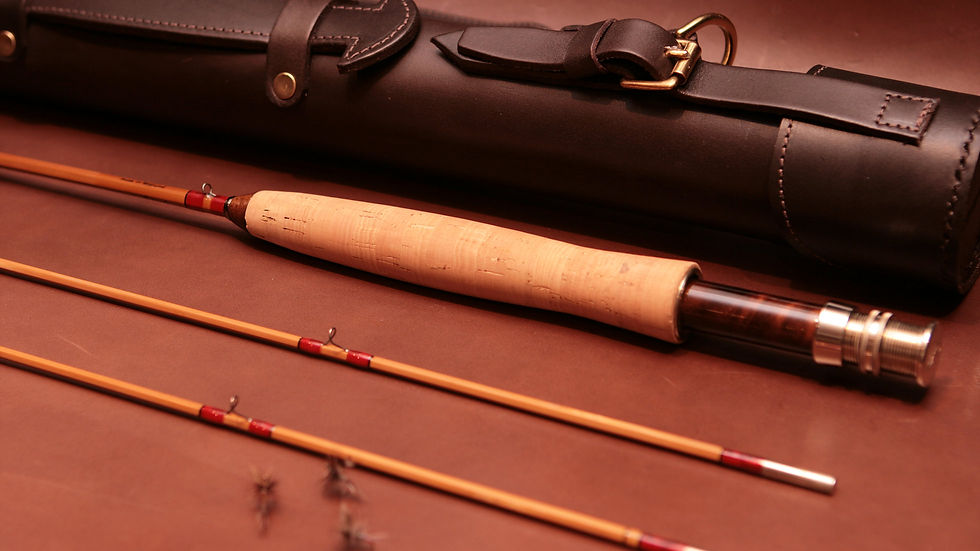
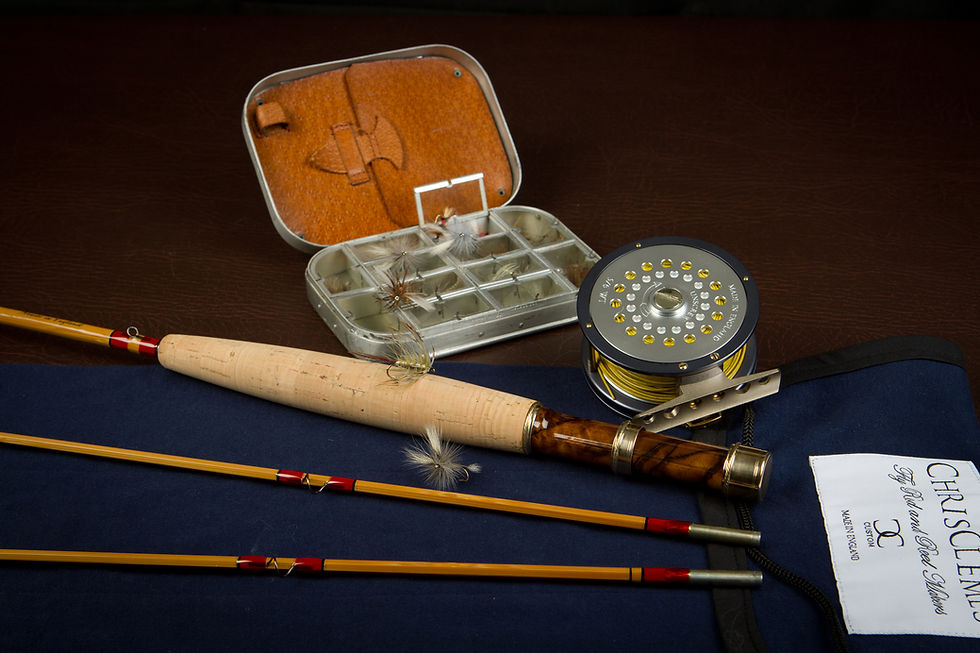
£1,500–£3,000 is bespoke commissions. A Chris Clemes 2-piece, 1-tip rod is £1,550. A 2-piece, 2-tip rod (with a spare tip) is £1,850. The hand-written inscription is included. The prices reflect the time the work takes (broadly eighty hours per rod) and the cost of doing the materials properly.
£3,000 and up is the collector tier — vintage Payne, Pezon & Michel, late Hardy benches, contemporary American makers with waiting lists running into years. These rods can be fished, but most aren't.
A short note on the lower end. If your first rod is going to be vintage, spend the time to read about what to look for — the list further down will help. Vintage rods can be the best value in fly fishing or the worst, and the difference is rarely obvious from a photograph.
Custom or off-the-shelf?
The honest answer is: cast a borrowed rod first if you have the chance. Cane rods feel different from graphite, and there is no point commissioning a £1,500 rod to specifications you have made up. A morning on the water with a friend's rod will tell you more than a brochure ever can.
Once you know roughly what you like — what length, what line weight, whether you prefer a slower full-flex action or a faster progressive one — a bespoke rod becomes worth the cost. The point of a custom rod isn't that it is nicer (although it usually is). It is that it is built to suit you. Length to fit your river, action to fit your stroke, handle and reel seat to fit your hand and your reel.
If you're buying as a gift, custom usually wins on a different axis: a rod commissioned for someone is a different object from a rod bought for them. The former tends to be fished, the latter sometimes hung.

What to look for in any cane rod
This applies whether you're buying new from a maker, used from a shop, or vintage at auction. Six things matter.
Straight sections. Hold the rod up to a window and rotate it slowly. Each section should be straight. A small "set" — a slight curve in the upper sections — is normal in older rods that have been fished hard, and isn't a problem if it's modest. A pronounced bend or kink is.
Varnish. Run a finger along the blank. Good varnish is smooth, even, and slightly glossy. Chalky, sticky, peeling, or patchy varnish lets moisture into the cane underneath and is a problem. It can be redone, but the cost of a re-varnish is meaningful.
Ferrules. Where the rod sections join, the male ferrule should slide into the female with a clean, snug fit, neither too tight nor sloppy. Stuck ferrules are usually a sign of a rod that hasn't been looked after; loose ferrules a sign of wear.
Guides. The guides should be evenly spaced, securely wrapped, and smooth to the touch. Run a fingernail through each — any catch will damage your line. Replacing guides is a sound repair, but it tells you something about the rod's history.
Wraps. The thread wraps holding the guides should be tight, consistent, and well-finished. Wraps that are loose, frayed, or coming undone indicate a rod near the end of its current dressing.
Maker's mark. Most quality cane rods carry a maker's name, usually on the upper ferrule, the butt, or near the reel seat. A rod without any mark — particularly a rod that looks expensive — should make you cautious. Anonymity in cane is uncommon and usually meaningful.
If you're buying vintage, two more things help. A maker who is still active, or has a known successor handling repairs, is worth more than one whose work can no longer be supported. And a rod with a documented provenance — bills of sale, repair records, the original tube — is worth more than a rod without one. The romance of an old rod is in its history; the practical value is in its repairability.
Commissioning a custom rod
The process at our workshop, and at most serious cane shops, looks roughly like this.
A first conversation. Where do you fish, what do you fish for, what rods do you currently own and like, and what would you like a cane rod to do that they don't. This is the most important step. A maker who doesn't ask these questions is making the same rod for everyone.
Specifications. Length and line weight are the largest decisions. For most British and European fishing, seven to eight feet and a four or five weight covers ninety per cent of useful work. Action — full-flex, mid-flex, or progressive — matters less than length and weight, but matters. Handle shape, reel seat, varnish colour, and any inscription are decided here too.
Deposit and queue. We ask for fifty per cent on commissioning. That reserves a slot in the workshop and pays for the materials. The remainder is invoiced when the rod is finished, before shipping.
Build time. About three months from deposit to delivery, give or take. The actual bench time is shorter; the schedule fits around the other rods being made at the same time.
Inspection and delivery. Before a rod leaves the workshop, it is strung up and cast. Anything off — a heavy guide, a wrap that hasn't taken finish properly, an action that doesn't sit where it should — is corrected. The rod is then shipped in its tube, with a written record of its specification.
After delivery. Cane rods are durable but not invulnerable. Wipe the rod down after fishing, store it loose in its tube rather than under tension, and bring it back to the workshop every several years for inspection. Most repairs that come up — a cracked tip, a worn wrap, a stiffened ferrule — are straightforward to put right.
Buying for a gift
Most of our gift commissions are for retirements, sixtieth and seventieth birthdays, and the occasional Father's Day. The pattern is consistent: someone in the family is a serious angler, the rest of the family wants to mark an occasion, and they want a present that won't sit on a mantelpiece.
Lead time matters. A custom rod takes about three months. For a Christmas gift, commission no later than September. For a summer retirement, commission in March or April. We have made rods on tighter schedules, but it isn't ideal.
You don't need to know the exact specifications. We talk to the recipient if appropriate, or we work from your description of the rivers they fish and how they fish them. The rod can also be designed as a surprise — we've done both.
The inscription is included. A name, a date, a river, a short phrase — something that ties the rod to its owner. The inscriptions are written by hand under the varnish and become a permanent part of the rod.
A fifty per cent deposit reserves the slot. The balance is invoiced when the rod is finished. We can arrange a presentation card or note for gift-giving if you don't want the rod itself to arrive on the day.
A few common mistakes
Buying unexamined from auction sites. A rod that looks fine in five photographs can be set, cracked, ferrule-stuck, or otherwise wrong. If you can't see the rod in person, buy from a dealer who has examined it and will accept a return.
Choosing the wrong line weight. A rod that is a weight or two heavier than your usual fishing will tire you out. A rod that is too light will frustrate you. If most of your fishing is small streams and dry flies, look at 3 and 4 weights. If most is general river work, 5 weights. Heavier rods become specialist tools rather than first cane rods.
Ignoring maintenance. Cane needs to be dried, stored properly, and inspected. The rod that goes from river to the back of the car to the attic for a winter is the rod that comes back to us next spring with a stuck ferrule and a bloomed varnish. None of this is hard work, but it isn't optional.
Treating the rod as too precious to use. A cane rod that hasn't been fished is in the wrong place. The rods that last best are the ones that get fished regularly. The cane, the varnish, and the wraps all behave better in use than in storage.
Frequently asked
How long will a cane rod last? With reasonable care, an active fishing life of forty to sixty years is normal. Many of our customers' rods are older than they are.
Can I fish an expensive rod, or should I keep it for show? Fish it. A cane rod that isn't fished isn't doing what it was built for. Reasonable handling — drying, loose storage in the tube — is more than enough.
How much maintenance does a cane rod actually need? Very little, day to day. Wipe it down after fishing. Store it loose. Once every several years, it's worth bringing the rod back for inspection — a fresh wrap or two, a touch of varnish where it's worn. Most rods need this work once every decade or so, not every season.
Bamboo or graphite for casting? They are different tools. Graphite is faster and longer; cane is slower and quieter. The most useful answer is that experienced anglers tend to own both, and reach for cane when the fishing suits it.
How do I commission a rod? The simplest start is a brief email or message. We'll ask the questions that matter, send a draft specification back, and take a deposit when you're happy with it. There's no pressure to commit; the questions cost nothing.
If you'd like to discuss commissioning a rod, the shop page has the current models, the heirloom page has more on the craft and care of split cane rods, and the contact page has the simplest way to get in touch.




Comments